
Industry — lifting & material handling
Configurators for lifting and handling equipment
Load cases, heights and site conditions handled as rules, not as tribal knowledge.
Lifts, cranes, hoists and handling systems are sold into an existing building or production line. The product has to fit the site, the load and the regulations that apply there.
That makes configuration a question of engineering logic first and product options second.
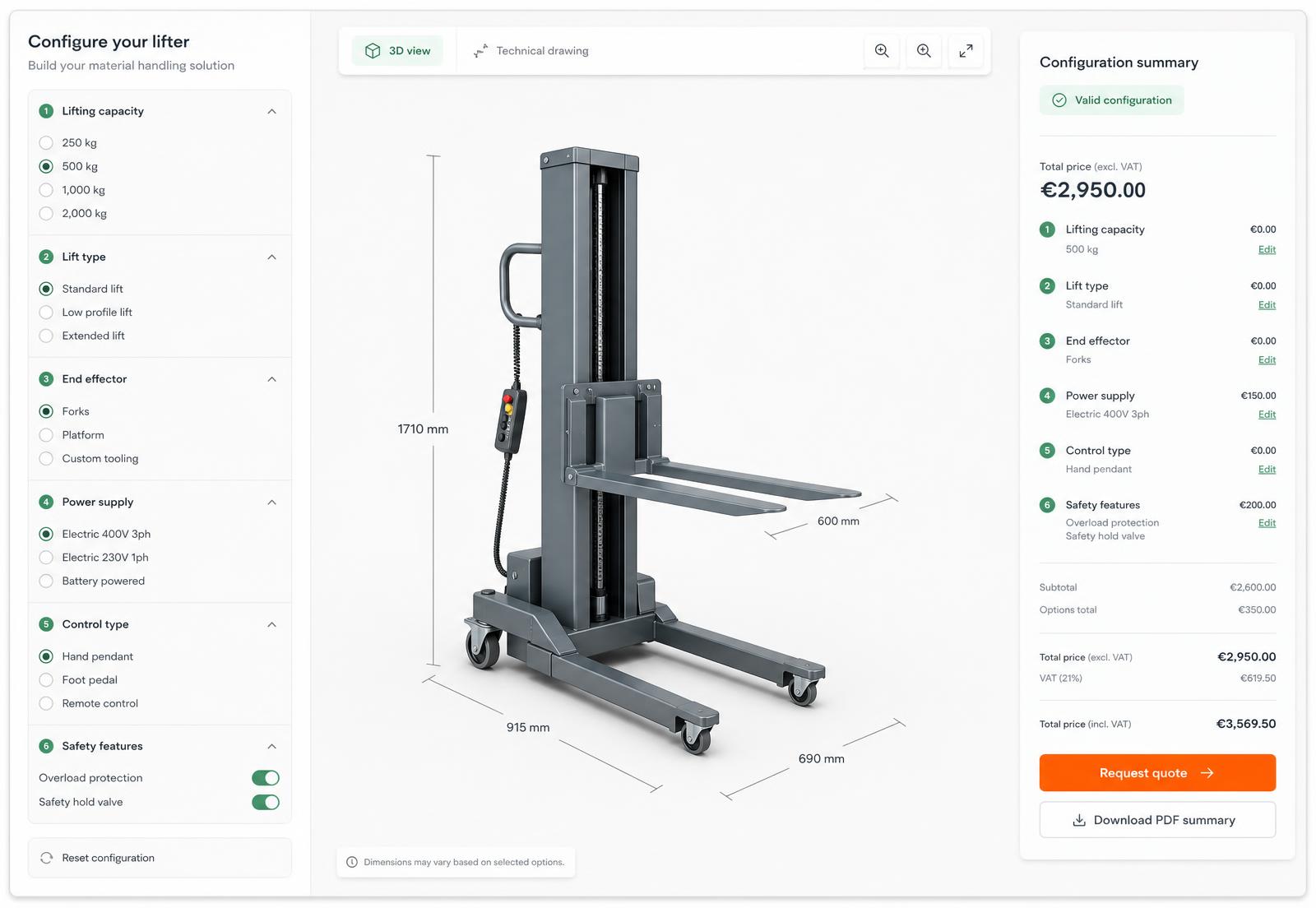
Typical situation
Every enquiry starts with site measurements, load requirements and a set of local rules to check.
The answer is technically correct only if someone with long experience reviews it, which limits how many enquiries can be handled at once.
Rules a configurator can carry
- Capacity, load cases and duty classes
- Travel, lifting height and available site dimensions
- Structure, fixings and interface to the building
- Standards and market-specific requirements
- Installation, service access and accessory combinations
What changes in daily work
Sales can answer on the spot
A guided specification returns a valid layout, a price and a document set while the customer is still on the call.
Engineering reviews instead of redraws
Geometry and drawings are generated from the configuration, so engineering time goes into the genuinely new cases.
Knowledge is written down
Product knowledge is digitized and reused rather than being tied to individuals.